When you master Homemade Sweets Recipes, you unlock the ability to create desserts that surpass anything available at commercial bakeries. The art of crafting sweets in your own kitchen gives you complete control over ingredients, flavor profiles, and portion sizes. Home bakers who develop these skills save money while producing treats that align perfectly with their family’s preferences and dietary needs.
The foundation of successful dessert making starts with understanding core techniques. Professional pastry chefs spend years perfecting these methods, but home cooks can achieve exceptional results by focusing on temperature control, precise measurements, and ingredient quality.
Store-bought desserts contain preservatives, artificial flavors, and stabilizers that extend shelf life but compromise taste. According to food safety guidelines from the USDA, many commercial sweets include additives that home recipes eliminate entirely. Your kitchen becomes a laboratory for pure ingredients.
Cost analysis reveals that homemade desserts reduce expenses by 60-75% compared to bakery purchases. A batch of chocolate chip cookies costs approximately $4 in ingredients but yields 36 cookies, while bakery equivalents run $2-3 per cookie. The mathematics favor home production.
Customization represents another advantage. Dietary restrictions, allergen concerns, and flavor preferences receive immediate accommodation when you control the recipe. Gluten-free, dairy-free, or reduced-sugar variations become simple modifications rather than expensive specialty purchases.
Essential Equipment for Homemade Sweets Recipes Success
Professional results require appropriate tools. A stand mixer transforms labor-intensive tasks into effortless operations. Digital kitchen scales ensure precision that volume measurements cannot match, particularly for baking chemistry where ratios determine success or failure.
Temperature monitoring equipment separates amateur attempts from professional outcomes. Instant-read thermometers, oven thermometers, and candy thermometers eliminate guesswork from temperature-dependent processes like caramel making or chocolate tempering.
Equipment Type
Investment Range
Impact on Results
Priority Level
Stand Mixer
$200-$400
High – Essential for consistent mixing
Critical
Digital Scale
$15-$30
High – Ensures accuracy
Critical
Instant-Read Thermometer
$25-$50
High – Prevents overcooking
Critical
Silicone Baking Mats
$20-$35
Medium – Improves consistency
Important
Offset Spatula
$8-$15
Medium – Better finishing
Useful
Categories of Homemade Sweets Recipes to Master
Chocolate-Based Homemade Sweets Recipes
Chocolate work demands respect for tempering science. The cocoa butter crystallization process requires specific temperature ranges that most home bakers ignore, resulting in bloomed, grainy chocolate. Proper tempering produces that satisfying snap and glossy finish found in professional confections.
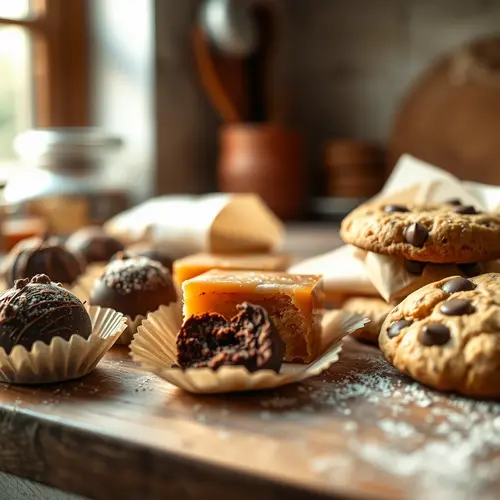
Fudge represents an accessible entry point into chocolate craftsmanship. The technique involves cooking sugar solutions to soft-ball stage (235-240°F), then cooling and beating until crystals form. This controlled crystallization creates the characteristic smooth, creamy texture that defines quality fudge.
Truffles offer endless variation potential. The ganache base—a simple emulsion of chocolate and cream—accepts flavor infusions from liqueurs, extracts, spices, or fruit purees. Rolling techniques and coating options transform basic ganache into elegant presentations.
Sugar Work and Candy Making
Hard candy production teaches fundamental sugar chemistry. As water evaporates from sugar solutions, temperature increases create distinct stages: thread, soft ball, firm ball, hard ball, soft crack, and hard crack. Each stage produces different candy textures, from soft caramels to brittle lollipops.
Caramel represents the most versatile sweet in any baker’s repertoire. The Maillard reaction and caramelization create hundreds of flavor compounds as sugar breaks down under heat. Controlling this process—knowing when to stop before bitterness develops—separates competent candy makers from exceptional ones.
Baked Sweet Treats
Cookies demonstrate the impact of fat ratios on texture. Higher butter content creates spread and crispness, while shortening produces cake-like thickness. The creaming method—beating butter and sugar—incorporates air that leavens during baking. Understanding these mechanics allows recipe adjustment for desired outcomes.
Brownies occupy the spectrum between cake and fudge. The ratio of flour to fat determines final texture. Less flour yields fudgy centers, while increased flour creates cakey structures. Most recipes target the middle ground, but personal preference should guide your formula.
Homemade Sweets Recipes Expert Techniques That Elevate Results
Mise en place—the French culinary practice of preparing all ingredients before starting—prevents the common mistake of discovering missing components mid-recipe. Professional kitchens operate on this principle because it eliminates stress and reduces errors.
Room temperature ingredients blend more uniformly than cold ones. Butter, eggs, and dairy should sit at 65-70°F for optimal emulsification. This simple step prevents curdling, improves texture, and ensures even distribution throughout batters and doughs.
Resting dough allows gluten relaxation and flavor development. Cookie dough refrigerated for 24-72 hours produces deeper flavors as enzymes break down proteins and sugars undergo chemical changes. Pastry professionals always plan ahead for superior outcomes.
Homemade Sweets Recipes Common Myths Debunked by Science
The widespread belief that sifting flour aerates it for lighter cakes lacks scientific support. Modern milling produces flour that requires no sifting unless removing lumps. Spooning flour into measuring cups and leveling with a knife provides sufficient accuracy for most applications. Weight measurement eliminates this debate entirely.
Another persistent myth claims that opening the oven during baking ruins cakes. While excessive door opening causes temperature fluctuations, brief checks after proper rise occurs cause no harm. Professional bakers rotate pans mid-bake for even coloring without destroying their products.
Dense, heavy cakes typically result from over mixing after flour addition. Gluten development—desirable in bread—creates toughness in cakes. Mix only until ingredients combine, using folding motions rather than vigorous beating once flour enters the mixture.
Crystallized candy reflects improper sugar dissolution or contamination. Sugar crystals on pan sides seed the entire batch, causing graininess. Washing down sides with wet pastry brushes during cooking prevents this issue. Adding corn syrup or cream of tartar interferes with crystallization through inversion chemistry.
Melted chocolate that seizes into grainy clumps encountered water contamination. Chocolate contains no water, and even small moisture amounts cause cocoa particles to bind. The fix requires adding more liquid (not removing it) to create a proper emulsion, though the chocolate becomes ganache rather than pure melted chocolate.
Building Your Homemade Sweets Recipes
Start with foundational Homemade Sweets Recipes that teach core techniques. Chocolate chip cookies develop creaming skills. Vanilla cupcakes teach proper batter consistency. Caramel sauce builds confidence with sugar work. These basics form the platform for advanced creations.
Document modifications and results in recipe margins. Professional bakers maintain detailed notes on temperature adjustments, ingredient substitutions, and outcome observations. This practice creates personalized formulas optimized for your specific equipment and environment.
Seasonal and Occasion-Specific Homemade Sweets Recipes
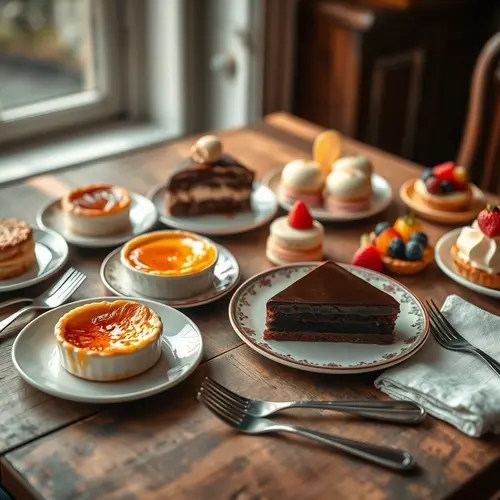
Strategic recipe planning aligns treats with seasons and celebrations. Peppermint bark dominates winter months. Fruit tarts showcase spring and summer produce. Spiced cookies embrace autumn flavors. This rotation prevents boredom while capitalizing on ingredient availability and peak freshness.
Occasion-based planning creates anticipation and tradition. Birthday cakes, holiday cookies, and celebration desserts become signature items that family members request specifically. These traditions build over time, forming the emotional foundation of food memories.
Homemade Sweets Recipes Storage and Preservation Techniques
Proper storage extends sweet shelf life and maintains quality. Most cookies store well at room temperature in airtight containers for 5-7 days. Freezing extends this to 3 months without quality loss. Layer cookies between parchment paper to prevent sticking.
Chocolate work requires cool, dry storage away from strong odors. Chocolate absorbs surrounding aromas readily, and temperature fluctuations cause bloom—those white streaks that indicate fat or sugar crystal migration. Consistent 65-68°F storage prevents these issues.
The FDA recommends refrigerating any sweets containing dairy, eggs, or cream cheese within two hours of preparation. Food safety principles cannot be compromised for convenience, particularly when serving vulnerable populations like young children or elderly individuals.
Homemade Sweets Recipes Scaling for Different Batch Sizes
Linear scaling works for most Homemade Sweets Recipes, but leavening agents require careful consideration. Doubling a cake recipe means doubling everything, but tripling might need adjusted baking powder to prevent excessive rise or metallic aftertaste. Test scaled recipes before committing to large batches.
Pan size adjustments affect baking time more than temperature. Thicker layers require longer baking at the same temperature, while thinner spreads bake faster. The toothpick test remains the most reliable doneness indicator regardless of recipe scaling.
Final Perspective on Homemade Sweets Recipes Mastery
Excellence in Homemade Sweets Recipes develops through repetition and careful observation. Each baking session provides data about your oven’s hot spots, your local humidity’s impact on sugar work, and how your specific ingredients perform. Professional pastry chefs accumulate this knowledge over years, but dedicated home bakers accelerate learning by maintaining detailed records and analyzing results critically.
The investment in quality ingredients pays dividends in final product quality. Premium vanilla extract, high-fat European butter, and quality chocolate cost more initially but produce noticeably superior results. Budget allocation should prioritize these impact ingredients over decorative elements.
Start your journey with Homemade Sweets Recipes that match your current skill level, then progressively challenge yourself with more complex techniques. The satisfaction of serving desserts you created from scratch, understanding every ingredient and technique involved, surpasses any convenience of store-bought alternatives. Your kitchen becomes a place of creativity, scientific precision, and delicious rewards.