Unique Baked Goods
Searching for Unique Baked Goods that break away from standard cookies and cakes? The bakery landscape has evolved beyond traditional offerings, with artisans pushing creative boundaries through unexpected flavor combinations, unconventional techniques, and cultural fusion. Whether you’re a home baker seeking inspiration or a consumer hunting for memorable treats, understanding what makes baked goods truly unique opens up a world of culinary possibilities.
The demand for distinctive bakery items has grown substantially. According to industry analysis from the Specialty Food Association, consumers actively seek products that offer novel experiences and artisanal quality over mass-produced alternatives.
What Makes Unique Baked Goods Stand Out
Distinctive baked items share specific characteristics that separate them from conventional offerings. These aren’t just standard recipes with minor tweaks.
Innovation happens at multiple levels. Ingredient selection drives uniqueness when bakers incorporate uncommon elements like black sesame, tahini, cardamom, or miso into familiar formats. Technique variation creates distinction through methods such as lamination experiments, fermentation manipulation, or temperature control precision.
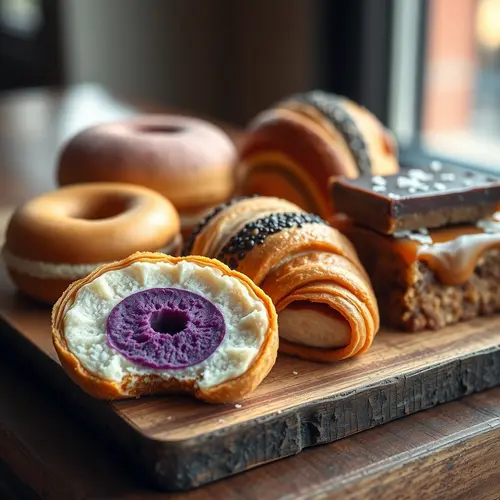
Cultural fusion represents another pathway to uniqueness. Hybrid creations like cronuts, mochi donuts, or churro cheesecakes blend traditions from different culinary backgrounds. These cross-cultural innovations often become viral sensations because they offer familiar comfort with unexpected novelty.
The Science Behind Innovation in Unique Baked Goods
Creating truly distinctive baked items requires understanding fundamental baking chemistry. The Maillard reaction, gluten development, and sugar crystallization all behave differently when unconventional ingredients enter the equation.
Bakers must account for how alternative flours affect hydration ratios. Nut-based flours absorb moisture differently than wheat flour. Moisture-rich ingredients like sweet potato or pumpkin require formula adjustments to maintain proper texture.
Temperature control becomes critical with delicate additions. Infused oils, fresh herbs, or alcohol-based flavorings can destabilize emulsions if incorporated incorrectly. Professional bakers often test small batches multiple times before finalizing recipes.
Categories of Innovation in Baking
Understanding the main innovation categories helps identify what makes certain items genuinely unique versus simply different.
| Innovation Type | Example Products | Key Characteristic |
|---|---|---|
| Ingredient Substitution | Black sesame croissants, matcha scones, olive oil cakes | Replaces standard ingredients with distinctive alternatives |
| Cultural Fusion | Mochi donuts, baklava brownies, ube cheesecake | Combines techniques or flavors from different traditions |
| Technique Innovation | Sourdough donuts, laminated cookies, twice-baked scones | Applies unexpected methods to traditional formats |
| Format Disruption | Cookie cups, pie bars, deconstructed cakes | Reimagines serving style or structural presentation |
Regional Specialties as Unique Baked Goods
Geography plays a significant role in baking distinctiveness. Regional specialties often remain unknown outside their areas of origin, making them unique discoveries for broader audiences.
The Upper Midwest offers kringle, a Danish-inspired oval pastry with intricate layering. New England features hermit cookies with robust spicing and molasses depth. The South showcases chess pie variations and bourbon-spiked confections.
Immigrant communities contribute substantial diversity. Korean bakeries produce cream-filled buns and red bean pastries. Mexican panaderías offer conchas with sugar-crusted tops and tres leches variations. These culturally-specific items expand the definition of what American bakeries can offer.
Creating Your Own Unique Baked Goods at Home
Home bakers can develop distinctive items through systematic experimentation. Start with a reliable base recipe before introducing innovative elements.
The safest modification approach involves flavor additions rather than structural changes. Add cardamom to shortbread, incorporate tahini into brownies, or swirl miso caramel into blondies. These alterations preserve proven ratios while introducing novelty.
Expert Troubleshooting Insights
Many home bakers encounter specific challenges when attempting Unique Baked Goods. One common issue involves moisture imbalance when adding wet ingredients like fruit purées or vegetable bases.
The solution requires compensatory flour increases or strategic use of stabilizers. For every quarter cup of wet ingredient addition, increase flour by approximately two tablespoons and monitor dough consistency. This maintains structural integrity without sacrificing the unique flavoring component.
Another frequent problem involves bitter or overpowering flavors from intense ingredients like matcha, cocoa nibs, or certain herbs. Balance requires understanding flavor perception thresholds and incorporating complementary sweetness or fat content to round out aggressive notes.
Where to Source and Experience Specialty Items
Finding Unique Baked Goods requires knowing where innovative bakers operate. Farmers markets often showcase small-batch producers experimenting with seasonal ingredients and unconventional recipes.
Specialty grocers increasingly dedicate shelf space to artisanal bakeries. Whole Foods Market, regional chains, and independent stores frequently partner with local producers who create distinctive items unavailable through standard commercial channels.
- Research local bakeries through Instagram and food blogs to identify innovation-focused establishments
- Check ethnic bakeries for culturally-specific items that offer genuine uniqueness
- Explore online ordering from renowned specialty bakeries that ship nationwide
- Visit food festivals and culinary events where experimental bakers showcase new creations
- Join local food groups or baking communities to discover underground or pop-up operations
The Business Perspective on Unique Baked Goods
For bakery business owners, unique offerings provide competitive differentiation. Standard cookies and muffins face intense price competition from supermarket bakeries and national chains.
Distinctive items command premium pricing because they cannot be easily replicated. A baker offering cardamom pistachio rolls or brown butter miso cookies creates a moat against commodity competition. Customers willing to pay more for unique experiences represent higher-margin business opportunities.
Menu development requires balancing innovation with consistency. Too much experimentation confuses customers and complicates production. Successful bakeries typically maintain 60-70% core items with 30-40% rotating specialties.
Debunking the Complexity Myth
A persistent misconception suggests that Unique Baked Goods require professional training or specialized equipment. This belief prevents home bakers from attempting innovation.
Reality contradicts this assumption. Many distinctive items emerge from simple modifications to standard recipes. Adding brown butter instead of regular butter transforms basic cookies into something memorable. Incorporating unexpected mix-ins like freeze-dried fruit, flavored salts, or toasted seeds creates uniqueness without technical complexity.
The barrier to entry involves creativity and willingness to experiment, not necessarily advanced skills. Understanding basic ratios and observing how ingredients interact provides sufficient foundation for developing original baked goods.
Preservation and Storage Considerations
Unique ingredients often introduce storage challenges. Fresh herb additions, alternative flours, and specialty fats may reduce shelf life compared to traditional recipes.
Proper storage becomes essential. Items with nut-based components require refrigeration to prevent rancidity. Moisture-rich additions like fresh fruit benefit from single-layer storage to prevent condensation issues. Understanding these nuances ensures Unique Baked Goods maintain quality through their intended consumption window.
Freezing provides an excellent preservation method for most baked items. Properly wrapped products maintain quality for several months. Thawing at room temperature or gentle reheating restores freshness effectively.
Final Perspective on Distinctive Baking
The landscape of Unique Baked Goods continues expanding as bakers draw inspiration from global cuisines, seasonal ingredients, and technique innovation. Whether you’re creating at home or seeking special purchases, understanding what drives uniqueness helps you identify truly distinctive items versus superficial variations.
Focus on authentic innovation rather than novelty for novelty’s sake. The most successful unique baked goods balance creativity with solid technique, offering familiar comfort alongside pleasant surprise. This combination creates memorable experiences that transform ordinary treats into extraordinary discoveries.