Bakery Recipe
A Bakery Recipe represents more than just a list of ingredients—it’s a precisely calibrated formula that professional bakers have refined through years of testing and commercial production. Unlike home recipes that allow for approximations, these formulas require exact ratios, specific techniques, and an understanding of how ingredients interact under commercial baking conditions.
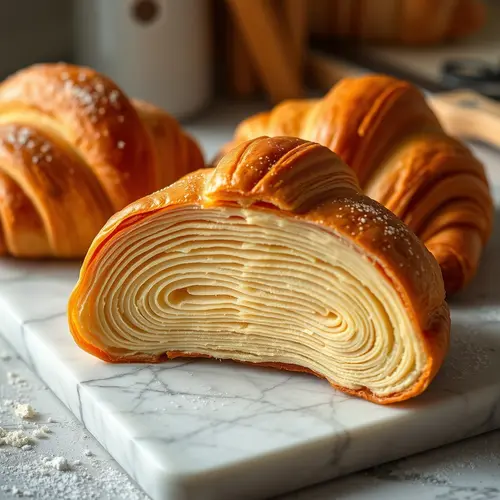
The key difference lies in the baker’s percentage system, where flour serves as the baseline (100%) and all other ingredients are calculated as percentages of that weight. Professional bakeries operate on fundamentals that home bakers often overlook. Temperature control, hydration percentages, and mixing times aren’t suggestions—they’re critical variables that determine whether your croissant shatters with buttery layers or falls flat.
Understanding What Makes a Bakery Recipe Different
Commercial bakeries don’t measure ingredients in cups. They use weight-based formulas because accuracy determines profitability and consistency across hundreds of units daily. A 2% variance in hydration can mean the difference between perfect crumb structure and a dense, gummy interior.
The baker’s percentage system might seem intimidating, but it’s elegantly simple. If your flour weighs 1000 grams (100%), and your water weighs 650 grams, you’re working with 65% hydration. This universal language allows bakers worldwide to scale recipes precisely and troubleshoot issues systematically.
According to the American Institute of Baking, professional formulas account for ambient humidity, flour protein content, and even seasonal variations in ingredient performance. Home recipes rarely include these adjustments, which explains why bakery items taste consistently excellent while home attempts vary wildly.
The Core Components of a Professional Bakery Recipe
Every successful bakery formula contains five fundamental elements: structure builders (flour, eggs), tenderizers (fats, sugar), leaveners (yeast, baking powder), liquids (water, milk), and flavor enhancers (salt, vanilla). The ratio between these categories determines the final product’s character.
Bread requires high protein flour (12-14%) for gluten development, while cakes need low protein flour (8-10%) for tenderness. This single variable explains why using all-purpose flour in every Bakery Recipe produces mediocre results. Professional bakers stock multiple flour types and know exactly when to deploy each.
Essential Bakery Recipe – Professional Techniques
Temperature management separates amateur baking from professional results. Dough temperature should hit 75-78°F after mixing for optimal yeast activity. Calculate your water temperature using this formula: Desired Dough Temp × 3 – (Room Temp + Flour Temp + Friction Factor) = Water Temperature.
The friction factor varies by mixer type—stand mixers generate approximately 20-25°F of heat during mixing. Ignoring this variable means your dough starts fermentation too warm or too cold, throwing off your entire timeline.
Mastering Hydration for Different Bakery Recipe Categories
Hydration percentages dictate texture more than any other variable. Bagels work at 50-55% hydration for that distinctive chew, while ciabatta requires 75-80% for its open, irregular crumb. French baguettes hit the sweet spot around 65-70%.
High hydration doughs demand different handling. You can’t knead an 80% hydration dough traditionally—it requires stretch-and-fold techniques performed at intervals during bulk fermentation. This builds gluten structure without adding excess flour that would alter your carefully calculated formula.
| Product Type | Hydration Range | Protein Content | Mixing Time |
|---|---|---|---|
| Bagels | 50-55% | 13-14% | 8-10 minutes |
| Sandwich Bread | 60-65% | 12-13% | 12-15 minutes |
| Artisan Bread | 70-75% | 12-13% | 5-7 minutes |
| Ciabatta | 75-80% | 11-12% | 6-8 minutes |
| Croissants | 55-60% | 11-12% | 4-6 minutes |
Bakery Recipe Fermentation Control and Timing
Professional bakers manipulate fermentation as a flavor development tool. A Bakery Recipe might specify overnight cold fermentation not for convenience, but because slow fermentation produces complex flavors that quick rises cannot match. The Maillard reaction during baking intensifies these fermentation byproducts, creating that signature bakery aroma.
Bulk fermentation should increase dough volume by 50-100%, depending on the formula. Over-fermentation causes structural collapse and sour flavors. Under-fermentation yields tight crumb and bland taste. Use the “poke test”—properly fermented dough springs back slowly when poked, leaving a slight indentation.
Mixing Bakery Recipe Methods That Define Texture
The straight dough method works for most Bakery Recipe applications, but understanding alternatives expands your capabilities. The sponge method pre-ferments part of your flour with all the yeast, developing flavor while maintaining a predictable schedule. The tangzhong method (water roux) pre-gelatinizes flour, creating impossibly soft bread that stays fresh longer.
Each mixing method serves specific goals. High-speed mixing develops gluten quickly but generates heat. Low-speed mixing preserves temperature control but requires longer times. Professional bakers match method to desired outcome rather than following a single approach.
Bakery Recipe Ingredient Quality and Sourcing
Commercial bakeries source ingredients differently than retail consumers. They buy flour milled to their specifications, with guaranteed protein content and ash levels. European-style butter contains 82-84% butterfat versus American butter’s 80%, which significantly impacts laminated dough performance.
Active dry yeast and instant yeast aren’t interchangeable at equal weights. Instant yeast is more concentrated—use 25% less by weight. Fresh yeast (cake yeast) performs differently still, requiring twice the weight of instant yeast. These conversions matter when adapting a Bakery Recipe to available ingredients.
Scaling Bakery Recipe Accurately
The baker’s percentage system makes scaling trivial—multiply every ingredient by your desired flour weight divided by 100. Want to make 5 pounds of baguette dough from a formula listing 1000g flour? Calculate: 2268g (5 lbs in grams) ÷ 1000 = 2.268. Multiply every ingredient percentage by 2.268.
However, some elements don’t scale linearly. Yeast percentage might decrease slightly in large batches because thermal mass maintains temperature better. Salt can be reduced marginally in very large mixes. These are advanced adjustments that separate competent from exceptional bakers.
Common Bakery Recipe Troubleshooting
- Dense crumb: Insufficient gluten development, under-fermentation, or over-mixing in short process methods
- Gummy texture: Too much hydration for the flour’s protein level, under-baking, or inadequate cooling before slicing
- Pale crust: Insufficient sugar for browning, oven temperature too low, or lack of steam in initial baking phase
- Excessive spreading: Butter too soft during lamination, dough over-proofed, or oven temperature insufficient
- Sour flavor: Over-fermentation, wild yeast contamination, or ambient temperature too high during proofing
Expert Opinion: The Myth of “Secret Bakery Recipe”
The bakery industry perpetuates the myth that exceptional products require secret ingredients or closely guarded formulas. After working with dozens of commercial operations, the truth is simpler: consistency beats novelty. The best Bakery Recipe is one you can execute identically every single day.
Most “secret ingredients” are compensating for poor technique. Adding dough conditioners might improve mediocre bread, but proper fermentation and gluten development eliminate the need entirely. Focus on mastering fundamentals before chasing exotic additions.
Bakery Recipe – Professional Equipment Considerations
Commercial deck ovens with steam injection create crust characteristics impossible in home ovens. The thermal mass of a 500-pound deck oven recovers temperature instantly after loading, while home ovens drop 50-75°F and take minutes to recover. This affects oven spring, crust development, and overall baking time.
You can approximate professional results using a baking steel or stone preheated for 60 minutes at maximum temperature, then reducing to baking temperature right before loading. Cast iron pans with boiling water provide makeshift steam, though not matching commercial steam injection systems.
Creating Your Own Professional Bakery Recipe
Developing a Bakery Recipe from scratch requires understanding ingredient functionality rather than memorizing ratios. Start with proven formulas, then adjust single variables while keeping detailed notes. Change hydration by 2-3% and observe results before making additional modifications.
Test batches should be evaluated cold, never warm. Bread tastes completely different at room temperature versus fresh from the oven. Professional bakers taste products 24 hours after baking to assess true keeping quality and flavor development.
Document everything: ambient temperature, ingredient brands, mixing times, fermentation duration, oven temperatures, and baking times. Reproducibility requires data, not memory. After 20-30 test bakes with controlled variables, you’ll have a robust formula that performs consistently under your specific conditions.
Final Thoughts on Bakery Recipe Mastery
Executing a Bakery Recipe at professional standards demands more than following instructions—it requires understanding the science behind each step and recognizing when adjustments are necessary. The difference between good and exceptional lies in those micro-adjustments that compensate for environmental variables and ingredient variations.
Start with proven formulas from reputable sources, master the fundamentals of temperature control and fermentation management, and develop your sensory evaluation skills. Your hands will eventually recognize proper dough consistency, your nose will detect fermentation readiness, and your eyes will spot over-proofing before it becomes a problem. This intuitive expertise only develops through repetition and deliberate practice, but it transforms baking from following recipes to executing formulas with professional confidence.