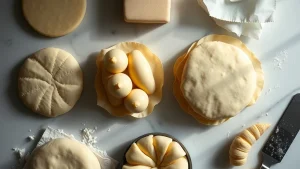
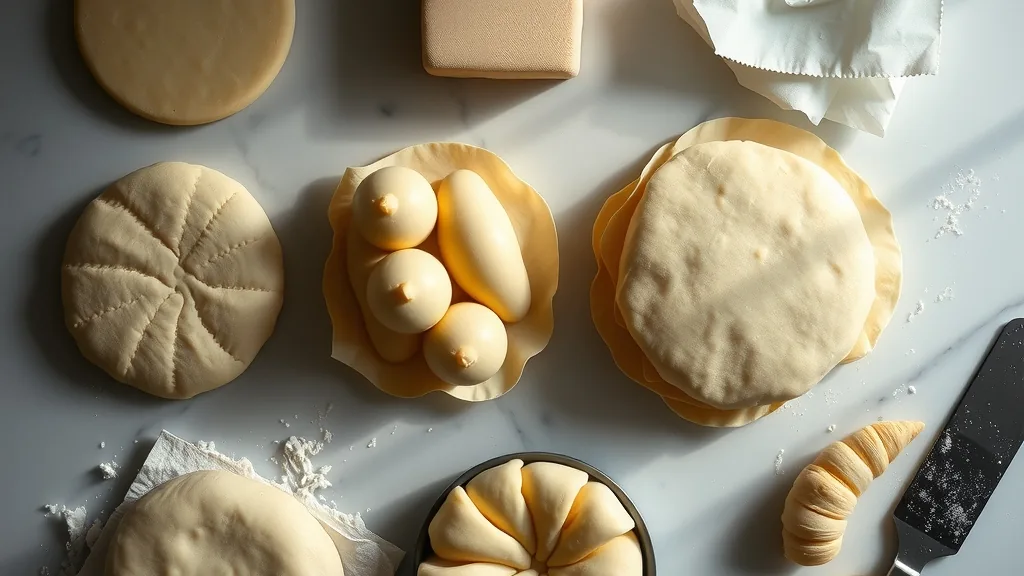
The types of pastry that matter in a home kitchen come down to six dough families: shortcrust, puff, choux, filo, hot water crust and yeast-laminated dough. Knowing those six types of pastry is enough to read almost any recipe with confidence: each one is defined by how it creates lift — fat, steam, eggs or yeast — and that single difference sets the fat ratio, the water level, the resting time and the oven temperature.
Types of Pastry at a Glance
Read the table as a map, not a recipe: find the texture you want, then follow the family that produces it. Hydration is expressed as water weight against flour weight, which is the number that changes behaviour most.
| Family | Lift comes from | Fat (vs flour) | Hydration | Oven | Best for |
|---|---|---|---|---|---|
| Shortcrust | Fat coating flour | 50% | 25–35% | 190–200°C | Pies, tarts, quiche |
| Puff | Steam between layers | 75–100% | 55–60% | 200–220°C | Vol-au-vents, palmiers, lids |
| Choux | Steam from egg and water | 50% | 200% (with egg) | 200°C then 170°C | Éclairs, profiteroles, gougères |
| Filo | Paper-thin layers, no block | Brush only | 55–60% | 180–190°C | Baklava, spanakopita, strudel |
| Hot water crust | Gluten set by boiling water | 30–40% | 60% | 180°C | Free-standing meat pies, hand pies |
| Yeast-laminated | Yeast plus steam | 25–30% butter block | 55–60% | 190–200°C | Croissants, danish, kouign-amann |
Shortcrust Pastry: The Everyday Base
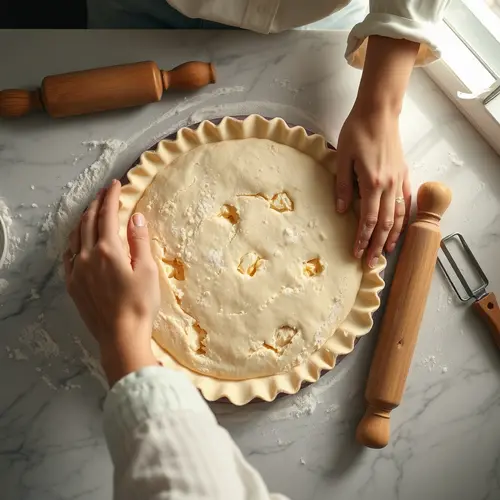
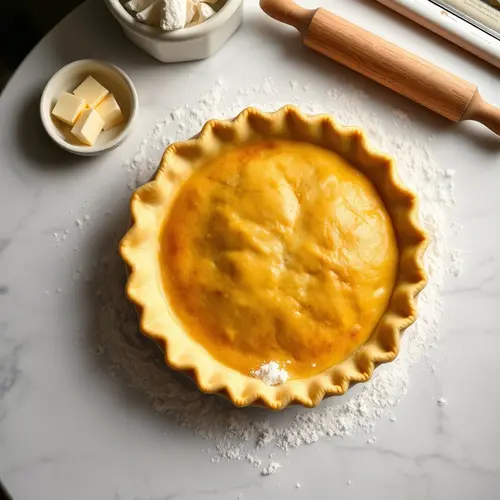
Shortcrust is flour, fat, salt and just enough water to hold together: two parts flour to one part cold butter by weight, with water at 25–35% of the flour weight. The fat coats the flour and blocks gluten, which is why the crust stays short instead of chewy.
It is the most forgiving of the types of pastry here, which is why every baker learns it first. Keep everything cold, cut the butter to pea size, and stop mixing the moment the dough clumps. Rest it 30 minutes in the fridge before rolling so the gluten relaxes and the pastry stops shrinking in the tin. Bake blind at 200°C for 15 minutes, then finish at 190°C once the filling goes in.
Sweet versions (pâte sucrée) add 10–15% sugar and an egg yolk, which makes the dough more tender but harder to patch. For a step-by-step method with weights, see the pie dough recipe built on the same ratios.
Puff Pastry and Rough Puff: Steam Does the Work
Puff pastry has no leavening at all. A butter block is folded into a soft dough, and in the oven the water in the butter turns to steam and pushes the layers apart. The butter block should weigh 75–100% of the flour weight, and the dough stays at 55–60% hydration.
True puff is the most technical of the types of pastry in this list: three single folds with a 30-minute chill between each gives roughly 54 visible layers — enough for lift without turning the dough grey. Work in a cool room, dust sparingly, and never let the butter soften past 18°C.
Rough puff is the shortcut: butter cut into 1 cm cubes, three folds, 15 minutes rest, and a result that sits between shortcrust and true puff. It is the version to start with if you have never laminated. Bake both at 200–220°C, and check how the store-bought version compares in the carbs puff pastry portion guide.
Choux Pastry: Steam From Within
Choux is cooked twice: once in a pan, once in the oven. Water and butter are boiled, flour is stirred in until the paste pulls away from the sides, and eggs are beaten in off the heat until the batter falls from the spoon in a V shape.
The classic ratio is 120 g water, 60 g butter, 75 g flour and 2–3 eggs (about 150 g). Pipe immediately, bake at 200°C for 20 minutes, then drop to 170°C for 15 minutes to dry the shells. Opening the door early collapses them — the steam that inflated them is also what keeps them up.
Choux is the only family here that needs eggs for structure, which is why it is also the least forgiving about batter consistency — unlike the other types of pastry, small errors show up immediately in the shell.
Filo and Strudel: Layers Without a Butter Block
Filo is stretched or rolled to roughly 0.1–0.3 mm and brushed with melted butter or oil between sheets. There is no butter block and no folding: the crispness comes from stacking many dry, thinly fat-coated layers.
Keep unused sheets under a damp towel, work fast, and bake at 180–190°C until uniformly gold. Store-bought filo behaves almost identically to homemade, and for most home cooks it is the practical choice; the difference is handling time, not flavour. Strudel dough is the same idea with a higher hydration and a longer rest.
Hot Water Crust: The Sturdy One
Hot water crust uses boiling water and melted lard, which sets the gluten before baking. That makes it strong enough to stand on its own without a tin — the reason it carries traditional raised pork pies.
Use roughly 60% water against flour weight and 30–40% fat, knead while warm, and shape within 20 minutes before the dough stiffens. Bake at 180°C; the crust holds its shape and stays crisp for days, which is exactly why it exists.
Yeast-Laminated Dough: Croissants, Danish and Kouign-Amann
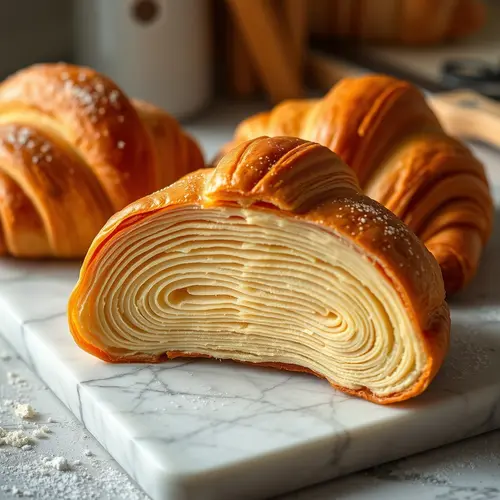
Yeast-laminated dough combines a lean yeasted dough at 55–60% hydration with a butter block at 25–30% of the dough weight, then folds and proofs cold. The yeast gives the rise; the butter layers give the flake.
Proof at 4°C for 12–16 hours, then at 24–26°C until the dough wobbles. Bake at 190–200°C. Warm butter is the failure mode here — if it melts into the dough during folding, the layers seal and the pastry bakes like bread.
The shaping and filling variations overlap with the ideas in perfect pastries recipe guide and the fruit-led versions in fruit filled pastry recipes.
How to Choose the Right Types of Pastry
Choosing between types of pastry comes down to two questions: how wet is the filling, and how much height does the bake need. Answer both and the family selects itself.
- Need structure that holds a wet filling: shortcrust, or hot water crust if the pie must stand alone.
- Need height and drama: puff, or rough puff when time is short.
- Need a hollow shell: choux.
- Need shatter-crisp layers: filo.
- Need a soft, buttery crumb: yeast-laminated dough.
Two rules cover most swaps. First, never exchange puff for shortcrust in a recipe that relies on lift — the filling will sit on a flat base. Second, when a recipe says “pastry” without naming a family, assume shortcrust unless the method mentions folding or chilling a butter block.
Rules That Apply to All Six Families
Four habits decide whether any of these doughs works, regardless of the family chosen. They cost nothing and remove most of the guesswork that makes pastry feel difficult.
- Weigh, do not scoop. A cup of flour can swing between 100 g and 150 g depending on how it is filled, which changes hydration by a third.
- Control temperature. Butter above 20°C loses the layers it is meant to create; dough above 24°C turns greasy and tough.
- Rest when asked. Chilling relaxes gluten, firms fat and lets flour hydrate, so the dough stops fighting the rolling pin.
- Calibrate the oven. An oven thermometer is the cheapest upgrade in pastry; a 20°C error is the difference between lift and collapse.
None of these steps take extra skill, and together they matter more than brand of flour or type of rolling pin.
Troubleshooting by Symptom
| Symptom | Likely cause | Fix next time |
|---|---|---|
| Crust shrinks in the tin | Gluten not rested | Chill 30 minutes before baking |
| Puff rises unevenly | Butter too warm during folds | Chill 30 minutes between folds, keep the room cool |
| Choux collapses after baking | Underbaked, or door opened early | Dry at 170°C for 15 minutes, no peeking |
| Filo soggy | Fat brushed too heavily, or filling wet | Light brush, drain filling 20 minutes |
| Hot water crust cracks | Dough cooled before shaping | Shape within 20 minutes while warm |
| Croissant layers sealed | Butter melted into the dough | Keep dough below 18°C while folding |
Most failures happen at the edges between types of pastry — puff handled like shortcrust, or choux mixed like a batter. Once the family is chosen, the rest is repetition: weigh the flour, control the temperature, and rest the dough when the recipe asks. For the next step, compare the laminated method in the simple pastries techniques guide, or move to yeast work with how to bake bread. Reference for the taxonomy: Pastry — Wikipedia.
Reviewed and updated: November 16, 2026.
How many types of pastry are there?
Six families cover almost every recipe: shortcrust, puff, choux, filo, hot water crust and yeast-laminated dough. Each is defined by what creates the lift, which then sets the fat ratio, hydration and oven temperature used.
Which type of pastry is best for pies?
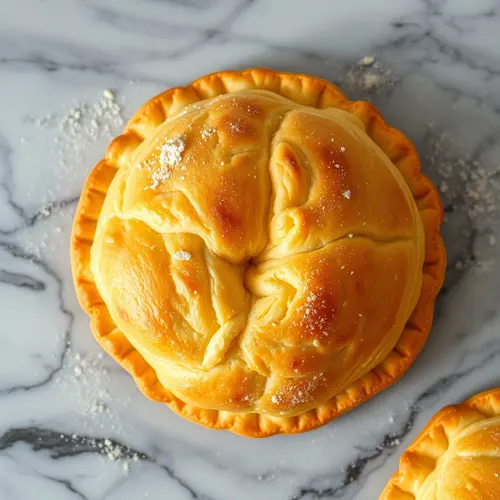
Shortcrust is the standard choice because it holds a wet filling without collapsing. Hot water crust is better when the pie has to stand without a tin. Puff belongs on top as a lid, not underneath a heavy filling.
Can I swap puff pastry for shortcrust?
Only when lift is irrelevant. Puff relies on steam between butter layers, so replacing it flattens the bake and changes the texture. For quiche and tarts, use shortcrust; for vol-au-vents and lids, keep the laminated dough.