If you want simple baked recipes that deliver reliable, bakery-quality results with minimal fuss, you do not need culinary school training. All it takes is a handful of proven formulas, pantry staples, and a single middle oven rack.
Whether you are craving a warm loaf of banana bread or a batch of chewy chocolate chip cookies, mastering a few core baking mechanics guarantees consistent, delicious bakes every single time.
Why Simple Baked Recipes Work (The Science of Easy Baking)
At its core, baking is pure chemistry. Lean doughs and quick batters rely on a balanced ratio of flour, fat, liquid, and leavening agents. When each component is measured accurately, the gluten network forms predictably, yielding a tender, perfect crumb.
1. Ditch the Cups: Weigh Your Ingredients
The single biggest mistake home cooks make is using measuring cups. Packing flour into a cup can add up to 20% more dry ingredient than a recipe calls for, resulting in dense, dry baked goods.
Leading culinary authorities, including King Arthur Baking Company, strongly recommend weighing dry ingredients on a digital kitchen scale. Measuring flour, sugar, and butter in grams eliminates volume errors and keeps your simple baked recipes light and airy.
2. Control Your Oven and Ingredient Temperatures
Temperature control operates on two distinct fronts:
Ingredient Temperature: Cold butter creates flaky, distinct layers in biscuits and pastries. Conversely, room-temperature butter and eggs emulsify cleanly in cake batters. Pull dairy and eggs out of the refrigerator 30 minutes prior to mixing.
Oven Calibration: An uncalibrated oven can drift by 25°F or more, turning a soft golden crust into a burnt edge. Hang an inexpensive oven thermometer on your center rack and adjust the dial until the reading matches your target temperature.
3. The Truth About Opening the Oven Door
A common baking myth insists that opening the oven door collapses your cake. In reality, a quick peek after the first 12 to 15 minutes rarely damages a bake because the structural proteins have already set. The true culprit behind sunken centers is frequent temperature swings caused by leaving the door open for too long.
Expert Testing Insight:
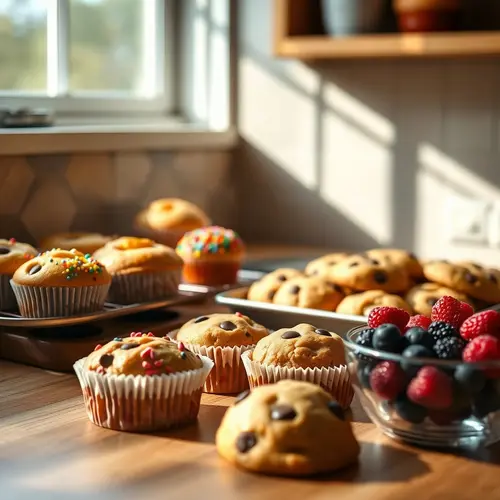
During side-by-side testing of various mixing methods for quick breads, hand-mixing with a sturdy rubber spatula consistently produced a lighter, more open crumb than using a stand mixer on low speed. The gentle folding motion preserves delicate air pockets rather than knocking them out. Try hand-mixing your next batch of muffin batter!
4 Foolproof Simple Baked Recipes to Master
To get started, use these baseline reference points for four classic, high-reward baked goods.
Item
Oven Temp (°F)
Bake Time (min)
Doneness Cue
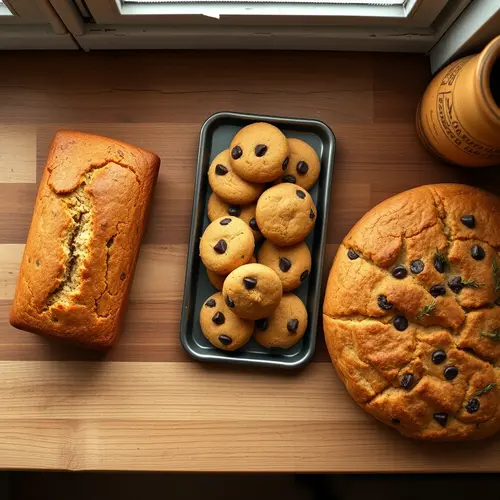
Classic Banana Bread
350°F
55–60
Top springs back when touched; toothpick comes out clean
Chewy Chocolate Chip Cookies
375°F
10–12
Edges are golden brown; centers remain soft
Herbed Sea Salt Focaccia
425°F
20–25
Surface is deeply dimpled and golden brown
Golden Cornbread
400°F
20–25
Edges pull away from pan; center feels firm
The Master Step-by-Step Simple Baked Recipes Method
No matter which dish you choose, applying this universal workflow ensures your simple baked recipes turn out perfectly every time:
Preheat and Position: Set your oven to the desired temperature and position your baking rack in the middle position for optimal heat circulation.
Weigh Dry Ingredients: Place your mixing bowl on a digital scale, weigh all dry ingredients, and whisk thoroughly to distribute leavening agents like baking powder or soda.
Emulsify Fats and Sugars: Cream room-temperature butter and sugar together until pale and fluffy, then beat in eggs one at a time.
Combine gently: Alternate adding dry mix and liquid to your creamed butter, starting and ending with the dry ingredients. Mix just until incorporated—overmixing leads to tough baked goods.
Bake by Cue, Not Just Clock: Portion your dough or batter into prepared pans and bake according to the chart above. Always check internal doneness rather than relying solely on the timer.
Cool Properly: Transfer baked goods to a wire cooling rack for at least 10 minutes before slicing or storing. This prevents condensation from making the bottom crust soggy.
Simple Baked Recipes Safety and Nutrition Upgrades
Simple baking does not mean sacrificing health or safety. According to guidelines from the USDA Food Safety and Inspection Service, baked goods containing eggs and dairy should reach an internal temperature of 190°F on an instant-read thermometer to guarantee food safety and proper structural set.
If you are looking to boost the nutritional profile of your everyday bakes, research from the Harvard T.H. Chan School of Public Health notes that swapping up to 50% of refined white flour with whole-grain flour adds essential dietary fiber and nutrients without compromising the final texture.
Simple Baked Recipes Frequently Asked Questions
What internal temperature indicates a baked cake or loaf is fully cooked?
Most yeast breads, quick breads, and butter cakes are perfectly baked when an instant-read digital thermometer inserted into the center reaches 190°F–200°F.
Can I substitute cup measurements with weight directly in any recipe?
Yes! As a general rule, 1 cup of all-purpose flour equals 120 grams, 1 cup of granulated sugar equals 200 grams, and 1 cup of unsalted butter equals 227 grams.
Why do my baked goods sink in the middle?
Center collapse usually happens due to expired baking powder, over-leavening, opening the oven door too early in the bake cycle, or an underheated oven.
Simple Baked Recipes Thoughts
Mastering these core fundamentals transforms home baking from an unpredictable gamble into a repeatable pleasure. By calibrating your oven, weighing ingredients, and reading doneness cues correctly, you can execute these simple baked recipes with complete confidence. Get your scale out, preheat your oven, and enjoy fresh, homemade bakes today!