Bread has four ingredients and three variables. Once you understand hydration, gluten development, and proof, how to bake bread stops being a mystery and becomes a repeatable routine. This guide uses a simple white loaf to teach the mechanics, then shows how to adjust for whole wheat, sourdough, and a busy schedule.
Bread is flour, water, salt, and time; the variables are hydration, gluten development, and proof.
The Basic Ratio
Start with baker’s percentages, which make any batch scalable:
Flour: 100 percent (500 g for one large loaf)
Water: 65 to 70 percent (325 to 350 g)
Salt: 2 percent (10 g)
Instant yeast: 1 percent (5 g), or about 1 teaspoon
That is a sturdy, forgiving dough. Higher hydration gives a more open crumb but is harder to handle; lower hydration is denser but easier for a first attempt.
Mixing and Gluten Development
Combine flour, water, and yeast, then rest for 20 minutes before adding salt. This autolyse rest hydrates the flour and shortens kneading. Add the salt and knead until the dough is smooth and passes the windowpane test: a small piece stretched thin lets light through without tearing.
By hand this takes 8 to 12 minutes; in a stand mixer, 5 to 7 minutes on low-medium. If you would rather not knead, use stretch-and-folds: every 30 minutes during the first two hours, stretch one side of the dough up and fold it over, rotating the bowl. Four sets is usually enough.
Bulk Fermentation
Cover the bowl and leave it at room temperature until it has roughly doubled, which takes 60 to 120 minutes with commercial yeast. Judge by feel, not the clock: the dough should look domed, feel airy, and spring back slowly when poked. A fast spring means it needs more time; no spring at all means it is over-proofed.
Cold retarding is the beginner’s best friend. Put the covered bowl in the fridge overnight after the first hour. The flavour improves and the schedule becomes flexible, because you can bake when it suits you.
Shaping and Final Proof
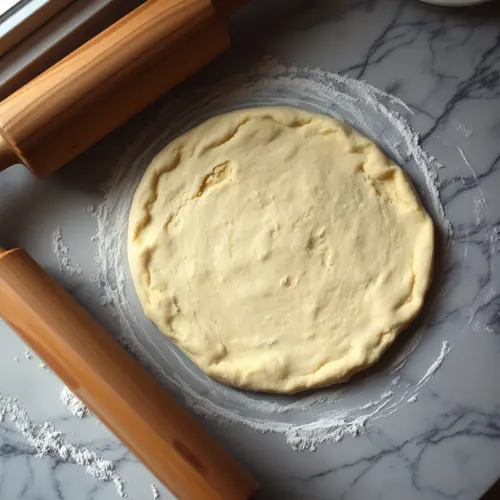
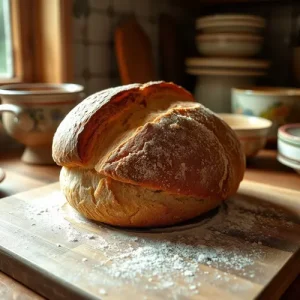
Turn the dough onto a lightly floured surface, flatten gently to release large gas pockets, then shape. For a round loaf, pull the edges to the centre, turn it over, and drag it on the bench to build surface tension. Place it seam-side down in a floured bowl or banneton.
Final proof takes 45 to 90 minutes at room temperature, or overnight in the fridge. The poke test still applies: a gentle press should leave a slight indentation that fills back slowly.
Oven Setup
Preheat to 230°C (450°F) with a Dutch oven or a heavy tray inside for at least 30 minutes. Steam is what gives a loaf its crust and oven spring; a covered Dutch oven traps it without any special equipment.
Score the top with a sharp blade at a shallow angle.
Lower the dough into the hot pot, cover, and bake 20 minutes.
Uncover, reduce to 210°C (410°F), and bake 20 to 25 minutes more.
Bake to an internal temperature of 96 to 99°C (205 to 210°F) for a standard white loaf.
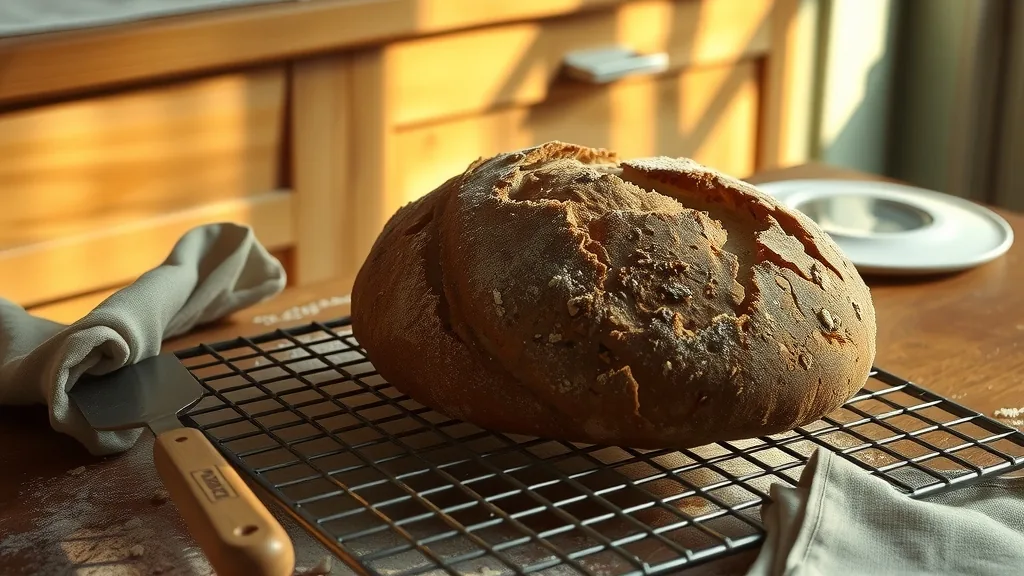
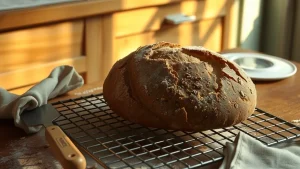
Cool completely on a rack before slicing, at least one hour.
Cutting hot bread steams the crumb and makes it gummy. This is the most common beginner mistake, and it is entirely avoidable.
Fixing Common Problems
Problem
Likely cause
Fix
Dense, heavy loaf
Under-proofed or weak gluten
Longer bulk ferment, more kneading or folds
Pale crust
Oven too cool or no steam
Preheat longer, use a covered pot, bake darker
Gummy crumb
Sliced too hot or underbaked
Cool fully, check internal temperature
Large holes with dense patches
Uneven shaping or under-fermented
Degas gently, extend bulk fermentation
Flat loaf
Over-proofed or weak shaping
Shorten final proof, build more surface tension
Sour or yeasty smell
Too much yeast or long warm ferment
Reduce yeast, retard in the fridge
Variations Worth Trying
Whole wheat: replace up to 40 percent of the flour and add extra water, because whole grains absorb more. Expect a denser loaf.
Sourdough: replace commercial yeast with an active starter at roughly 20 percent of the flour weight, and extend fermentation to 4 to 6 hours plus a cold retard.
Same-day schedule: mix in the morning, bulk ferment for two hours with folds, shape, proof for one hour, and bake. It is less flavourful than a retarded dough but entirely workable.
Once the basic loaf is reliable, the simple baked favourites collection is a good place to apply the same dough handling to rolls, flatbreads, and enriched breads.
What are the basic ingredients for bread?
Flour, water, salt, and yeast. A standard loaf uses 100 percent flour, 65 to 70 percent water, 2 percent salt, and 1 percent instant yeast.
How long should bread dough rise?
One to two hours at room temperature for commercial yeast, until roughly doubled. A cold overnight retard improves flavour and flexibility.
Why is my bread dense?
Usually under-proofing or insufficient gluten development. Extend bulk fermentation and add stretch-and-folds or kneading.
Do I need a Dutch oven to bake bread?
No, but it makes steam management easy. A heavy tray with a water pan in a well-preheated oven also works.