
osrs pastry dough
A pastry dough recipe is really a ratio with a method attached. Flour, fat, water, and salt in the right proportion will always work; the skill lies in keeping the fat cold and the mixing short.
This guide covers one reliable dough, how to roll and rest it, and what to do when it cracks, crumbles, or shrinks in the tin.
What pastry dough is and what it is not
Pastry dough is a short dough: fat is rubbed into flour until the mixture looks like crumbs, then water is added to bring it together. The fat coats the flour and limits gluten, which is why the baked result is tender rather than chewy.
It is not bread dough. There is no kneading, no proving, and no windowpane test. The less the dough is worked, the better it behaves.
Pastry dough recipe: ingredients and ratios
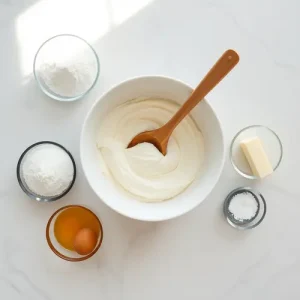
- 250 g plain flour.
- 150 g cold butter, cubed.
- Half a teaspoon salt.
- 60 to 75 ml ice water.
The ratio to remember is roughly two parts flour to one part fat by weight. Once that is fixed, you can scale the recipe up or down without rewriting it.
Use plain flour rather than strong bread flour. Higher protein means more gluten, and more gluten means a crust that fights back when you roll it.

Step by step mixing
Combine the flour and salt, add the cold cubes, and rub them in until the mixture resembles coarse sand with a few larger flakes. Add the water a spoon at a time, tossing with a knife, until the dough just holds together.
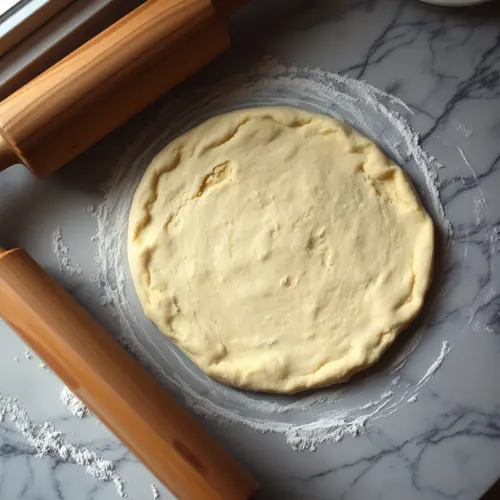
Turn it onto a lightly floured surface and press it into a disc with the heel of your hand. Do not knead. Two or three presses are enough to bring the dough together.
Resting, rolling, and shaping
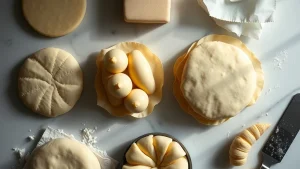
Wrap and chill the disc for thirty minutes. Roll it on a lightly floured surface, turning a quarter turn between passes, until it is about three millimetres thick.

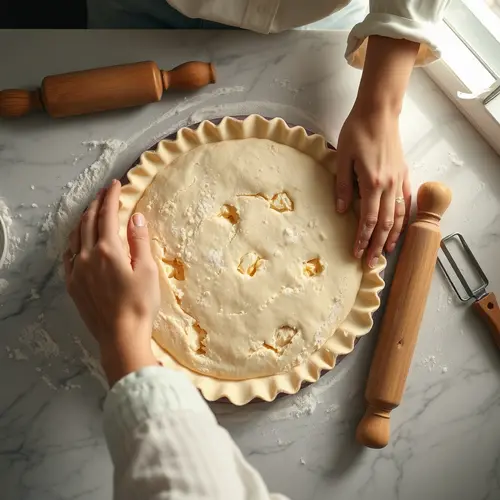
Drape the sheet over the rolling pin to lift it into the tin, then press it gently into the corners without stretching. Trim the overhang with a knife and prick the base lightly with a fork.
Blind baking for wet fillings
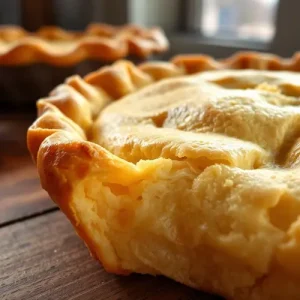
Line the chilled shell with parchment, fill it with baking weights or dry beans, and bake at 200 °C for fifteen minutes. Remove the weights and bake five minutes more, until the base looks dry and faintly golden.
For a quiche or a custard tart, brush the hot base with beaten egg and return it to the oven for two minutes. The egg sets into a seal that keeps the crust crisp under a liquid filling.

Troubleshooting: crumbly, cracked, shrinking
Crumbly dough usually needs one more spoon of water or a few more minutes of rest. Cracked edges while rolling mean the dough is too cold or too dry; let it sit for five minutes and try again.
Shrinking in the tin comes from stretching the dough during lining or from skipping the chill. Press rather than pull, and always rest the lined tin for ten minutes before baking.
What to make with the dough
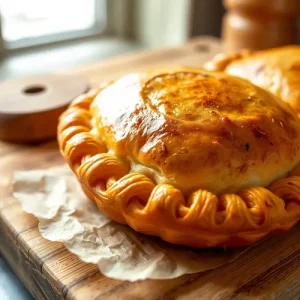
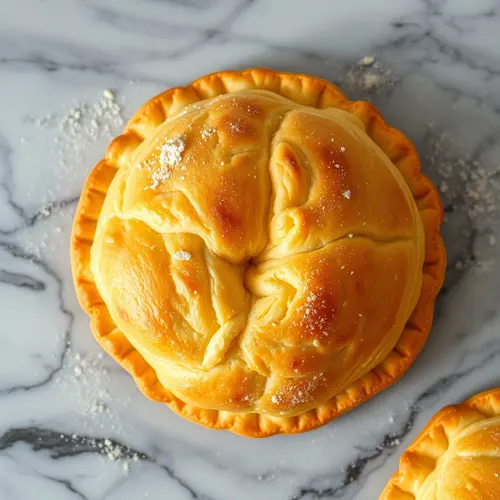
This dough suits tarts, quiches, hand pies, and simple galettes. It also works as a lid for a savoury pie, rolled a little thicker and sealed with a brush of beaten egg.
For a dessert, roll it thin, cut rounds, and bake them flat with cinnamon sugar for a quick biscuit. Scraps rerolled once are fine; a third roll will be noticeably tougher.
Storage and freezing
Keep wrapped dough in the fridge for up to three days and in the freezer for three months. Thaw it overnight in the fridge, never at room temperature, so the butter stays evenly firm.
Baked shells keep for two days in an airtight tin. Refresh them at 160 °C for five minutes before filling, which also drives off any moisture they picked up.
Which fat to use, and why
All-butter gives the best flavour and the fastest browning, but it softens quickly. A blend with a little lard or vegetable shortening holds shape better for decorative edges, at a small cost in taste.
Whatever you pick, keep the total weight the same. A pastry dough recipe fails more often from changed fat ratios than from a heavy hand with the rolling pin.
Cleaning up as you go
Flour on the bench dries the dough and hides how much you are adding. Brush the surface clean before rolling, and keep a small bowl of flour to dip the pin rather than scattering it by hand.
Wipe the bowl while the dough rests. A tidy bench makes the second half of the work quicker, and it stops stray crumbs from ending up baked into the base.
How the dough should feel
Before chilling, the dough should feel cool, slightly tacky, and firm enough to hold a pressed shape. If it sticks to your palm, add a spoon of flour; if it crumbles at the edge, add a few drops of water.
That judgement is the part a pastry dough recipe cannot teach. Two or three batches in, your hands will know before the scale does.
Lining the tin without tears
Roll the sheet a little wider than the tin, then lift it with the rolling pin instead of your fingers. Lower it gently and press into the corners with a small ball of spare dough.
Trim the overhang with a knife held at an angle, and patch any tear with a scrap pressed on firmly. Small repairs disappear in the oven; stretching the dough to cover a gap does not.
Making it ahead for a busy week
The dough keeps for three days in the fridge, which is enough to spread a tart across two evenings. Roll and line the tin on the first night, then cover and chill until the filling is ready.
A lined shell also freezes well for a month. Bake it from frozen at 200 °C, adding five minutes to the usual time, and the pastry dough recipe behaves exactly as it would fresh.
Questions about the dough
Why is my pastry dough recipe crumbly? It needs a spoon more water or a longer rest. Add water slowly, press the dough together, and the pastry dough recipe comes back within a minute or two.
Can I use salted butter? Yes, then leave out the added salt. This pastry dough recipe assumes unsalted butter, so adjust only the salt and keep the water the same.
How thin should I roll it? About three millimetres for a tart, five for a hand pie. Thinner than that and the pastry dough recipe produces a base that tears when you lift it.
Can this pastry dough recipe be used for a galette? Yes. The same pastry dough recipe rolls into a free-form galette, and the rough edges are part of the look rather than a mistake.
How long does it keep? Three days chilled, three months frozen. Wrap it tightly, because a pastry dough recipe picks up fridge smells within a day.
Why weigh the flour? Cups vary by forty grams. Weighing makes the pastry dough recipe repeatable, which matters more than any single ingredient in it.
What flour works best? Plain flour with around 10 to 11 percent protein. Strong bread flour makes a pastry dough recipe that fights the rolling pin and bakes up chewy.
Can I make it in advance? Yes, up to three days ahead in the fridge. A rested pastry dough recipe is easier to roll, so making it the night before usually improves the result.
Does the dough need to rest twice? Yes: once after mixing and once after lining the tin. Both rests are part of the pastry dough recipe, and skipping the second is the usual reason a shell slumps in the oven.
Related reading
- Temperature control for pie crust
- All-butter crust: the master method
- Types of pastry: six dough families
Getting consistent results
The same pastry dough recipe will behave differently in July and January, mostly because of kitchen temperature and flour humidity. Keep a note of the water you used and adjust by a spoon next time.
For flour weights and hydration reference, the King Arthur Baking test kitchen publishes charts that are a useful sanity check when a recipe feels off.