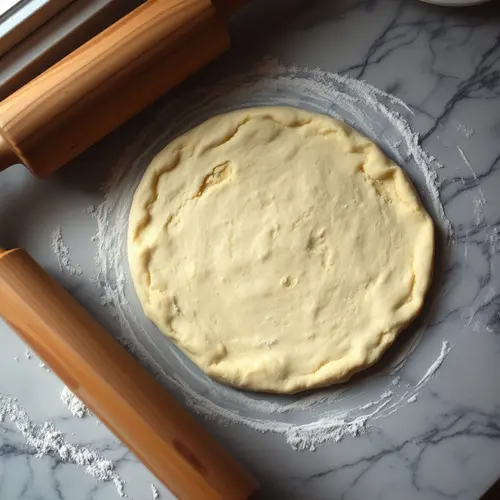
chef john pie dough
The chef john pie dough recipe has become a gold standard for home bakers seeking foolproof, flaky crusts without specialized equipment. This method delivers consistently tender results by combining precise fat-to-flour ratios with a unique mixing technique that minimizes gluten development while maximizing layer formation.
Why Chef John Pie Dough Works Better Than Traditional Methods
Traditional pie dough recipes often fail because they rely on vague instructions like “work quickly” or “don’t overmix.” The chef john pie dough approach eliminates guesswork through measurable steps and visual cues.
The technique centers on coating flour particles with fat before introducing water. This creates a hydrophobic barrier that prevents excessive gluten formation—the primary cause of tough, chewy crusts.
By using a food processor for the initial fat incorporation, you achieve uniform pea-sized butter pieces in seconds. This consistency is nearly impossible to replicate by hand, especially in warm kitchens where butter temperature becomes critical.
Essential Ingredient Ratios for Chef John Pie Dough
The foundation of chef john pie dough relies on a 3:2:1 ratio framework—three parts flour, two parts fat, one part liquid by weight. For a standard double-crust pie, this translates to:
| Ingredient | Weight | Volume | Purpose |
|---|---|---|---|
| All-purpose flour | 300g | 2½ cups | Structure and body |
| Unsalted butter (cold) | 200g | 14 tablespoons | Flakiness and flavor |
| Ice water | 90-120ml | 6-8 tablespoons | Hydration and binding |
| Salt | 6g | 1 teaspoon | Flavor enhancement |
| Sugar (optional) | 12g | 1 tablespoon | Browning and sweetness |
Fat Selection Impact on Chef John Pie Dough Results
Butter provides superior flavor but lower melting point. European-style butter with 82-84% butterfat content creates more distinct layers than standard American butter at 80% fat.
Shortening offers higher temperature stability and produces exceptional flakiness but lacks flavor complexity. A 50/50 butter-shortening blend balances both attributes—a strategy recommended by the American Institute of Baking for commercial applications.
Lard remains underutilized despite producing the most tender crusts due to its unique crystalline structure. Animal fats create shorter gluten strands than plant-based alternatives.
Step-by-Step Chef John Pie Dough Technique
Precision in execution separates amateur from professional results. Follow this sequence for optimal texture:
Cold Chain Management
Freeze your butter for 15 minutes before starting. Cut into ½-inch cubes while still firm. Place flour and salt in the food processor bowl and chill for 10 minutes.
Temperature control matters more than mixing time. According to research from the Wheat Foods Council, gluten development accelerates exponentially above 70°F.
The Pulse Method for Chef John Pie Dough
- Pulse flour and salt three times to aerate and combine
- Add cold butter cubes and pulse 8-10 times until mixture resembles coarse cornmeal with pea-sized pieces
- Transfer to a wide bowl (increased surface area speeds hydration)
- Drizzle ice water in a circular motion while tossing with a fork
- Add liquid incrementally—stop when dough just begins to clump
- Press a small amount between your fingers; it should hold together without being sticky
Resting Period Science
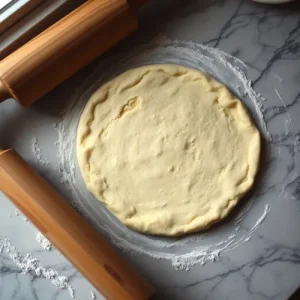
Divide dough into two discs, wrap tightly in plastic, and refrigerate for minimum 1 hour. This rest allows three critical processes:
Flour hydration completes as water molecules penetrate starch granules. Gluten strands relax, reducing spring-back during rolling. Butter firms up, ensuring distinct pockets rather than greasy blending.
The chef john pie dough can rest up to 3 days refrigerated or 3 months frozen without quality loss. For freezing, wrap in plastic then aluminum foil to prevent freezer burn.
Common Chef John Pie Dough Problems and Fixes
Tough, Chewy Crust
Cause: Overworking after water addition or insufficient fat coating. Solution: Mix only until dough comes together. Visible flour streaks are acceptable—they’ll hydrate during rest.
Soggy Bottom Syndrome
Blind baking solves most wet-filling issues. Dock the dough with a fork, line with parchment, fill with pie weights, and bake at 400°F for 15 minutes. Remove weights and bake 5 more minutes until golden.
Alternatively, brush raw dough with egg white or dust with fine breadcrumbs before filling to create a moisture barrier.
Shrinkage During Baking
Inadequate resting time causes this. Always chill rolled dough in the pan for 30 minutes before baking. Avoid stretching dough to fit—drape gently and let it settle naturally.
Expert Opinion: The Vodka Variation Myth
The vodka pie crust trend claims that replacing half the water with vodka produces more tender crusts because alcohol doesn’t develop gluten. This is technically accurate but practically negligible.
Testing by food science teams at Cook’s Illustrated found minimal texture difference in blind taste comparisons. The alcohol bakes off completely, and the marginal tenderness gain doesn’t justify the cost or extra ingredient.
Proper technique with standard chef john pie dough yields identical results. Focus on cold ingredients and minimal mixing rather than specialty liquids.
Advanced Applications Beyond Basic Pies
This dough adapts brilliantly to galettes, hand pies, and pot pie toppers. For savory applications, omit sugar and increase salt to 1½ teaspoons. Add fresh herbs or grated cheese during the final mixing stage.
The chef john pie dough also excels as a base for decorative lattice work. Roll to ⅛-inch thickness and cut strips with a fluted pastry wheel for professional appearance.
Whole Grain Variations
Substitute up to 30% of all-purpose flour with whole wheat or spelt flour for nutty complexity. Beyond this ratio, gluten content drops too low for proper structure. Add 1 extra tablespoon of water per ½ cup whole grain flour to compensate for increased absorption.
Storage and Make-Ahead Strategy
Unbaked chef john pie dough freezes exceptionally well. Roll into discs, separate with parchment, and stack in freezer bags. Thaw in refrigerator overnight before use.
For maximum convenience, roll dough and fit into pie plates before freezing. Wrap the entire plate assembly in plastic then foil. Bake directly from frozen, adding 5-10 minutes to bake time.
Baked shells store at room temperature for 2 days or frozen for 1 month. Refresh in a 350°F oven for 5 minutes before filling to restore crispness.
Final Thoughts on Mastering Chef John Pie Dough
Perfect pie crust isn’t about luck or intuition—it’s about understanding the science behind fat distribution and gluten management. The chef john pie dough method removes variables through systematic temperature control and measured technique.
Practice the pulse method until you recognize proper texture by sight. Once you’ve internalized these principles, you’ll produce consistent, bakery quality crusts regardless of recipe variations or filling choices.